
Montessori philosophy
Dr Maria Montessori developed her approach over a century ago, but its principles are more relevant today than ever. At its heart, Montessori is a deep respect for the child as a capable, curious, and naturally motivated learner.
What is Montessori education
Montessori education is an approach to education grounded on a powerful principle: children are naturally curious, capable and eager to learn. It is based on the scientific observation of each child's natural development, honouring their unique pace and style, and supporting them with what they need to succeed.
The approach builds not only academic knowledge and skills, but also the deeper capacities that support lifelong learning, concentration, self-regulation, independence and intrinsic motivation.
Children learn to persevere, follow their interests and take genuine satisfaction in mastering new skills and ideas. The result is children who have confidence in themselves as learners and a love of learning that is meaningful, purposeful and joyful.
"The children are now working as if I did not exist."
The Montessori classroom
Three-hour work cycles
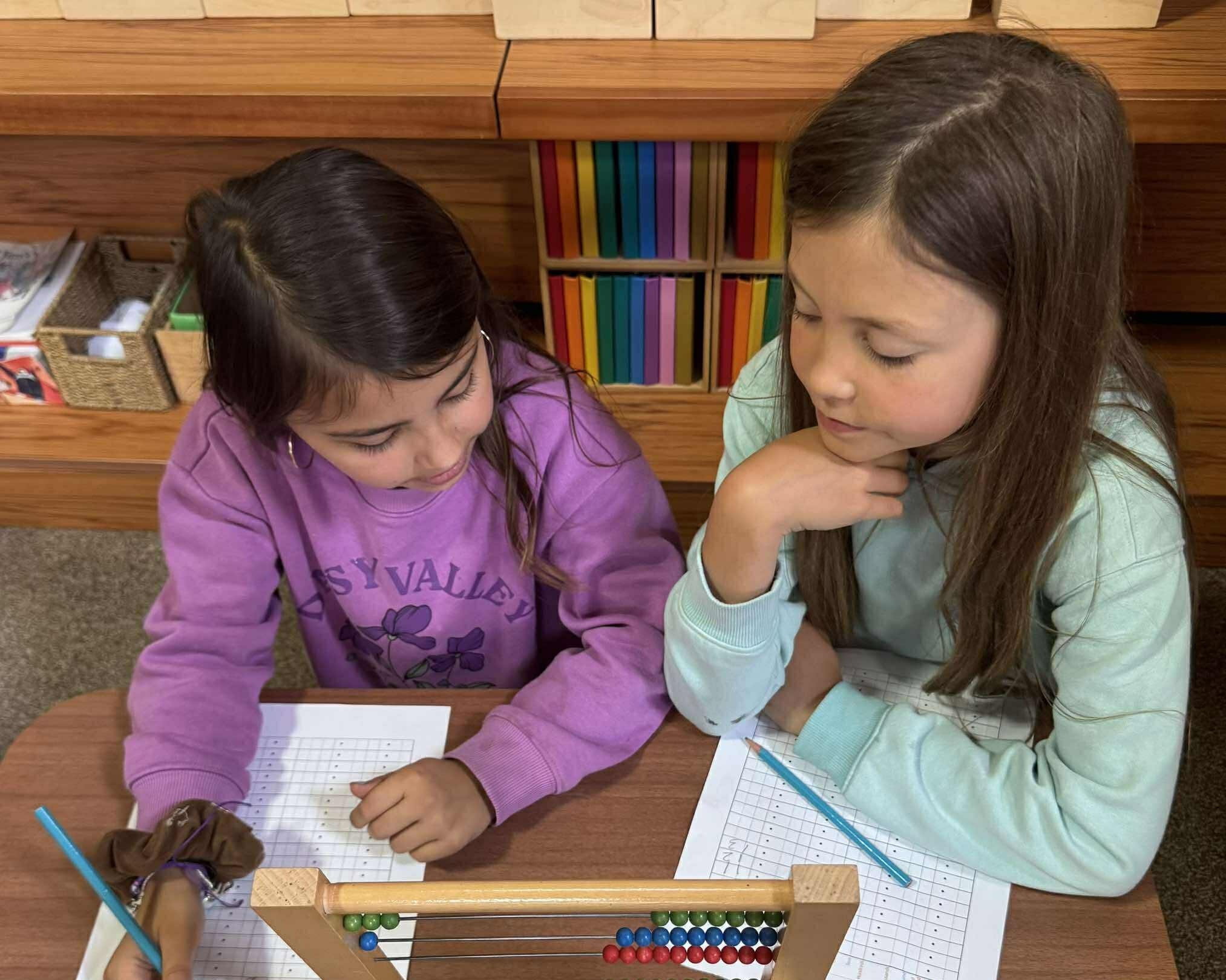
Children are free to engage deeply with activities within a three-hour uninterrupted work cycle. They have the space, time and confidence to persevere, follow their interests and take genuine satisfaction in mastering new skills and ideas.
Multi-age groupings
This multi-age community atmosphere allows for natural collaboration, role modelling, and the development of social and moral intelligence. Respect, social awareness and an understanding of connection to others, the community and the wider world are woven into everyday life.
The prepared environment
Every element of the Montessori classroom is intentional, beautiful, calm and accessible. Thoughtfully designed hands-on materials are arranged in a clear and logical way, inviting children to choose their work, develop concentration and confidence, and learn both independently and as part of a community.
Freedom with responsibility
Children have genuine choices in their learning. Guides observe each child closely, introducing new materials and concepts when they are ready, and knowing when to step in and when to step back. This freedom is paired with responsibility for their own progress, the materials, the environment and the community.
Find out more
Resources: Get in touch with us or Montessori Aotearoa New Zealand (MANZ) or Association Montessori Internationale (AMI).
If you would like to chat more on anything about Montessori learning, you are warmly welcome to:
Montessori primary education helps children understand the connections between all areas of learning while developing the independence, curiosity, collaboration and critical thinking skills needed for a changing world.